That deep, aching pain in your back. The sharp sensation that shoots down your arm or leg when you move a certain way. The stiffness that greets you every morning and the discomfort that follows you through the day. Disc disorders can be silently devastating — gradually limiting your movement, your productivity, and your quality of life.
At Activelife Physiotherapy, we specialise in the comprehensive, non-surgical management of disc bulge and all related disc disorders. With precise diagnosis, advanced treatment techniques, and a deeply personalised approach, we help you recover fully, move freely, and prevent future recurrence — without the risks of surgery.
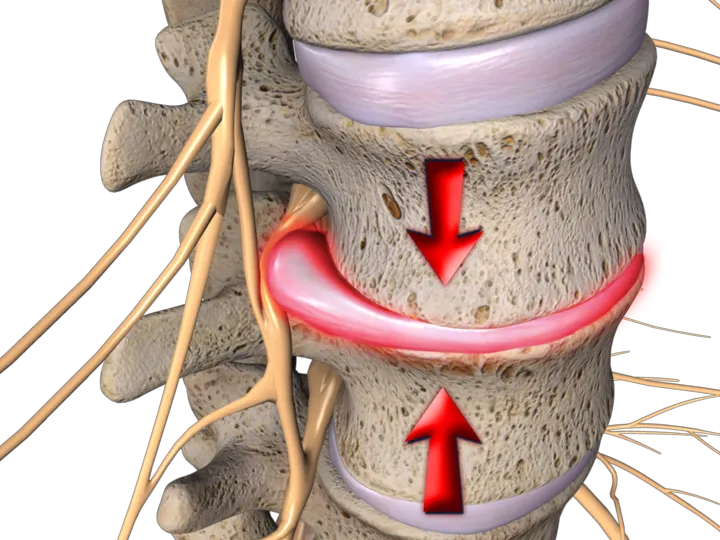
Your spine consists of 33 vertebrae stacked one above the other. Between these bones are soft, cushion-like structures called intervertebral discs.
Each disc has two parts:
When the outer layer weakens or tears, the inner material may bulge or protrude outward. This leads to conditions such as a disc bulge, herniated disc, or slipped disc, often causing nerve compression, pain, numbness, or weakness.
Disc Bulge
A mild condition where the disc extends beyond its normal boundary without rupturing. Although less severe, it can still compress nearby nerves and cause pain, stiffness, or discomfort.
Herniated Disc
A more serious condition in which the inner disc material pushes through the outer layer, leading to nerve irritation, inflammation, and potentially severe pain, numbness, or weakness.
Slipped Disc
A commonly used term describing disc displacement that places pressure on nearby nerves. With appropriate physiotherapy and rehabilitation, most cases can be managed effectively without surgery.
Degenerative Disc Disease
An age-related condition involving gradual wear and tear of the spinal discs, often resulting in chronic back pain, reduced flexibility, and stiffness.
Annular Tear
A tear in the outer layer of the disc (annulus fibrosus) that can cause localized pain and inflammation and may irritate surrounding nerves.
Disc problems often develop gradually due to a combination of lifestyle, occupational, and age-related factors. Common contributing causes include:
Disc-related symptoms vary depending on the location and severity of the affected disc. Common signs include:
Lower Back (Lumbar Spine) Symptoms
Neck (Cervical Spine) Symptoms
If these symptoms persist or worsen, early assessment and appropriate disc bulge treatment are important to relieve pressure on affected nerves, reduce pain, and prevent further complications.
At Activelife Physiotherapy, we focus on comprehensive spine disc rehabilitation through a structured, evidence-based, and personalised approach.
Every treatment plan is:
Our goal is to restore spinal function, improve mobility, and eliminate pain—helping you return to your daily activities without the need for surgery whenever possible.
At Activelife Physiotherapy, we use a combination of proven physiotherapy techniques to relieve pain, restore spinal function, and support long-term recovery from disc-related conditions.
1. McKenzie Method (MDT)
A globally recognised approach for managing disc-related pain. It uses specific movements and exercises to reduce symptoms, improve mobility, and support spinal alignment.
2. Manual Therapy & Spinal Mobilisation
Hands-on techniques designed to improve joint mobility, reduce stiffness, and relieve pressure on affected nerves and surrounding tissues.
3. Spinal Traction Therapy
A gentle decompression technique that helps reduce pressure on spinal discs and nerves, often providing relief from radiating pain and nerve compression symptoms.
4. Neural Mobilisation
Specialised nerve-gliding exercises that improve nerve mobility, reduce irritation, and help relieve radiating pain, tingling, and numbness.
5. Core Stabilisation Exercises
Targeted strengthening exercises that support the spine, improve stability, and reduce the risk of future disc-related problems.
6. Postural Correction
Improving posture and movement patterns to minimise stress on spinal structures and promote long-term spinal health.
7. Electrotherapy
Advanced pain-relief modalities may include:
These therapies can help reduce pain, inflammation, and muscle spasms while supporting the healing process.
8. Dry Needling & Myofascial Release
Techniques used to release muscle tightness, address trigger points, improve flexibility, and reduce pain.
9. Ergonomic & Lifestyle Guidance
Practical advice on sitting, standing, lifting, sleeping, and workplace ergonomics to help protect your spine and prevent recurrence.
10. Home Exercise Program
A personalised exercise plan designed to continue your recovery, maintain spinal health, and support long-term results between clinic visits.
Many people believe that surgery is the only solution for disc problems, but in reality, most cases can be managed successfully with conservative treatment and physiotherapy.
Non-surgical disc treatment is effective because it:
Early physiotherapy intervention often leads to faster recovery, better outcomes, and a reduced likelihood of long-term complications or recurrence.
Our physiotherapy programs are designed to effectively manage and rehabilitate a wide range of spinal disc and nerve-related conditions, including:
Why Choose Activelife Physiotherapy?
1. Can a disc bulge heal without surgery?
Yes. Most disc bulges respond very well to physiotherapy and conservative management. With appropriate treatment, exercise, and lifestyle modifications, the body can often heal naturally and symptoms can significantly improve without surgery.
2. How long does recovery take?
Recovery time varies depending on the severity of the condition, overall health, and adherence to treatment. Many patients experience noticeable improvement within 6–12 weeks of consistent physiotherapy and rehabilitation.
3. Is physiotherapy safe for disc disorders?
Yes. Physiotherapy is considered one of the safest and most effective first-line treatments for disc-related conditions. Treatment is tailored to each individual's symptoms, diagnosis, and recovery goals.
4. When is surgery required?
Surgery is generally reserved for severe cases involving significant neurological symptoms, progressive weakness, loss of bladder or bowel control, or when conservative treatment fails to provide adequate relief.
5. Can I continue working during treatment?
In most cases, yes. With appropriate activity modification, ergonomic advice, posture correction, and guided rehabilitation, many patients can continue their daily activities and work while undergoing treatment.